Spring trail hazards: it is still winter up high
Last updated:
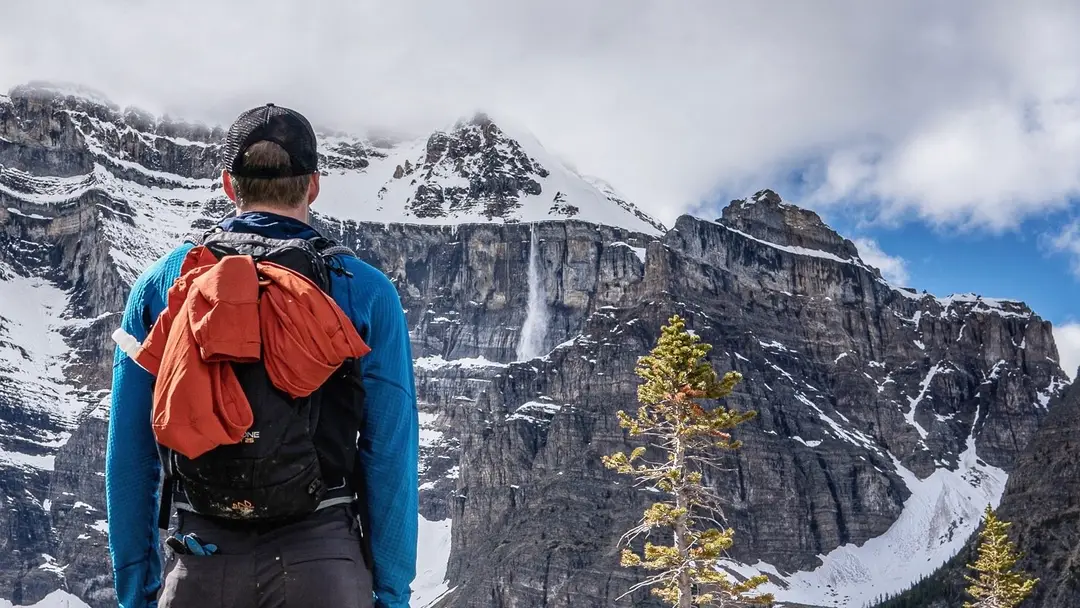
May 1, 2026. The summer hiking season around Lake Louise has not really started yet, whatever the calendar says. The Rockies are sitting on a near-record snowpack, and the trails most people associate with a casual day out, Lake Agnes, the Big and Little Beehive, the Plain of Six Glaciers, Bow Summit, are still buried.
Parks Canada Visitor Safety has had a busy April. On April 9, a solo hiker on the Plain of Six Glaciers trail sank thigh deep into unsupportive, isothermal snow and had to be flown out by helicopter. On April 14 alone, two hikers were slung off cliff faces on the same trail, and a third lost their footwear in deep snow and was rescued by snowmobile. None of these were backcountry skiers. They were people out on what is normally, in the summer, a tea house day hike.
Brian Morgan, a Parks Canada visitor safety specialist, said it plainly to CTV News last week: “it’s still winter up high.” The trails being attempted right now are summer objectives that typically come into condition in mid-June, not late April or early May.
Trails to wait on
Around Lake Louise, the routes named by Parks Canada and the local rescue teams as currently hazardous:
- Plain of Six Glaciers - active rescue site, deep isothermal snow, and the trail crosses multiple avalanche paths along the way
- Lake Agnes, Big Beehive, Little Beehive - snowbound, with exposed upper traverses on the Beehives, and the climb to Lake Agnes itself crosses slide paths even though the trail stays in the trees
- South side of the Lake Louise shoreline - snow and ice persist past the back of the lake, with Class 2 avalanche terrain still active above
- Bow Summit on the Icefields Parkway - full alpine, well above snow line
The advisory extends across Banff National Park more broadly. Parks Canada has also flagged Mt. Rundle, the Cory Pass Loop, and the unofficial trails on Sulphur Mountain as hazardous right now.
These are not “summer trails with a snow patch.” They are full alpine terrain at the moment, with avalanche hazard, isothermal snow that gives way underfoot, and runout zones that are still loaded.
What to do if you are out
If you are determined to be on snow, treat the trip like a winter outing:
- Microspikes or crampons. Polished, refrozen morning snow turns into a luge, and the afternoon “rotten snow” gives out without warning.
- Snowshoes if there has been fresh snow in the last 24 to 48 hours, or you will post-hole knee deep on the way up.
- Travel as a group, with avalanche training and gear for everyone. Beacon, shovel, and probe on every person, and the training to actually use them in a rescue. Avalanche terrain on these trails is not just the alpine; treed routes like the climb to Lake Agnes cross known slide paths too. The current bulletin is at avalanche.ca/banffyohokootenay.
- Tell someone your plan. Most of the recent rescues started because somebody noticed the hiker was overdue.
- Turn around early. A trail that is dry at the parking lot can be solid snow at the first lookout. Be honest about whether your group is equipped for what you find.
What is walkable
Lower elevation valley routes are starting to dry out. The Bow River corridor near the Village, the Lake Louise lakeshore along the flat north side as far as the back of the lake, and the Tramline connector down to the Village are all manageable as walks right now, with traction and bear spray.
Parks Canada posts current trail reports and bulletins at parks.canada.ca/banff. Check it the morning you go.
Short version: the snow is deeper than it has been in years, the upper trails are still winter, and people are getting hurt on routes they walked last summer in hikers. Wait a few weeks, or go prepared for what is actually up there.